

DO UNDERWATER CAMERAS SCARE AWAY FISH?
Fish are curious, not cowards
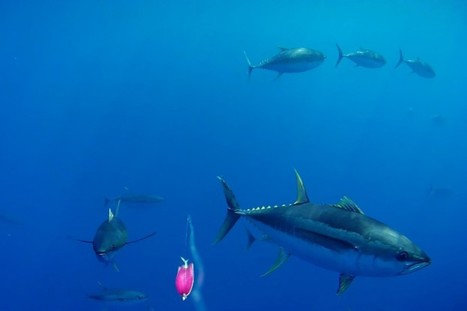
You ever mention using an underwater camera, and someone pipes up with, “Doesn’t that scare the fish?” I've heard this question more times than I can count. Dropping a piece of plastic and electronics into the water sounds like it might spook anything with fins. But the truth is, if you are using the right kind of camera and setting it up correctly, many fish do not care one bit. Some of them even get curious. We all know fish are "cautious," to say the least. In pressured lakes or clear water, they will dart off at the smallest disturbance - a shadow overhead, a clumsy cast, or the thunk of a boot on an aluminum hull. But that doesn't mean they will panic at every foreign object. Drop in a compact, quiet camera that moves naturally, and most fish are more likely to give it a once-over than to bolt.
It is all about size, movement, and noise
Fish don't have eyelids, and they sure know when something weird shows up in their living room. If your camera is too big, clunky, flashing lights, or spinning like a drunk bluegill, yeah, it might put fish off. Some anglers have noted that when cameras are introduced carefully and stay steady, fish are more likely to ignore or even investigate them. But as with any gear, how you use it - along with environmental factors - often matters more than the specs alone. And fish don't need a lot of excuse to back off - especially in clear or pressured water. But the smallest underwater cameras that are built to blend in - those slip by them much more easily. It becomes just another inanimate object drifting by, nothing worth expending the energy to run from. Anglers regularly run cams everywhere from under the ice to out in open water - and watch fish actually come closer to check it out.
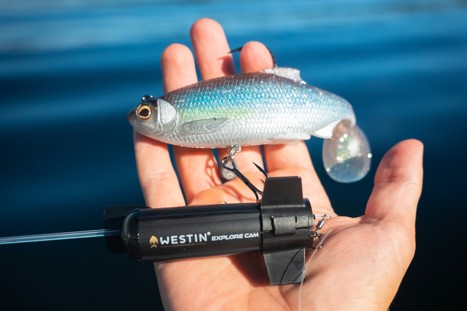
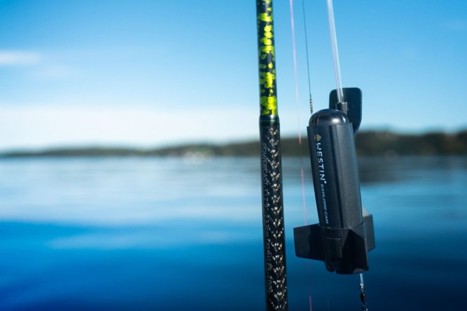
More compact, stable cameras generally create less disturbance and are less likely to trigger avoidance behavior. For example, models like the Westin Explore Cam and Escape Cam are designed to minimize motion and noise:
- The Westin Explore Cam is a compact option - roughly the size of a AA battery and weighing under an ounce. Its slow, steady descent can help reduce sudden movement in the water, which some anglers find beneficial in clear or pressured conditions.
- The Escape Cam is slightly heavier at 40 g / 1.4 ounces and includes features like a stabilizer and Dive Lip designed to help it maintain a steady trajectory. These design elements can help reduce erratic movement, making the camera less likely to disturb fish in sensitive environments.
- If you’re mainly looking to document the underwater environment without tracking fish behavior or towing behind a lure, action cameras like the Olympus Tough TG-6 can be fun tools. They’re durable and have generally high image quality, but they aren’t really designed for real-time fishing use.
- Another option for general underwater photography is the Ricoh WG-6. It’s waterproof and built to handle harsh environments, but like other action cams, it’s not suited for fishing-specific tasks like lure tracking, filming strikes, or real-time feedback.
There’s also a flood of no-name cameras out there, and they tend to fall short in key areas - hence the reason they are "no-name." Common trade-offs might include bulkier designs, limited stabilization, or features like bright lights or louder motors that could potentially disturb fish. That doesn’t mean they’re completely useless, but there’s usually a reason they stay off the radar. As with any gear, it’s important to review user feedback and test what is best suited for your fishing style and conditions. Without consistent build quality or thoughtful design, they can end up doing more harm than good underwater. When you're choosing an underwater fishing camera, it’s worth being picky -look for compact, quiet models with good user feedback and footage examples before dropping one in the water.
Let the fish get comfortable
Just like you wouldn't stomp into the woods shouting if you were trying to spot deer, you should not toss a camera into the water and expect fish to stick around for a photo shoot. Ease it in. Let it sink naturally and come to rest. Especially in clear water, fish notice sudden movement and noise, and they will hang back if something feels off. Give them a couple minutes. Let the camera become part of the "background" for them.
If you're casting it out ahead of your lure, or running it behind while trolling a weedline or drop-off, keep your presentation smooth and consistent. Fish are dialed in on motion and rhythm. When your lure moves naturally and the camera is not flailing around behind it, most of the time, the fish will lock in on the lure and ignore the camera entirely.
Tip: Let them come to you on their terms. Patience makes the footage better - and it makes the fishing better too.
Fine-tuning for conditions and species
Now, of course, not all fish react to everything the same way, and conditions matter more than folks sometimes think. Here are some general tips for fishing with underwater cameras:
- In clear, shallow water - especially when targeting cautious species like trout - you will want to be extra mindful of light and movement. Cameras with built-in lights can be helpful in murky or deep water, but in clear conditions, that brightness can act like a warning flare. If your camera has adjustable lighting, keep it dim. If it doesn't, you are probably better off going without it.
- Even with compact, low-profile setups like the Explore Cam or Escape Cam, placement still makes a difference. Dropping one near natural structure - like a rock pile, weedline, or sunken log - can help it blend into the environment and keep fish at ease. These cams are already small and steady, so they do not draw much attention. But giving them a backdrop that feels natural helps avoid putting fish on edge, especially in clear or high-pressure water.
- Fish tend to be less wary during low-light periods like dawn, dusk, or overcast days. If you're noticing spooky behavior during bright midday hours, it might not be the camera - it could just be the conditions.
Adjust your approach based on where you are fishing and what you are after. Some fish are bold, some are nervous. The more you pay attention to their behavior, the better you can use an underwater camera to your advantage. The way game fish react to underwater cameras depends heavily on the species, the camera type (especially noise and light), whether the underwater cam is rigged inline with the lure, water clarity, and fishing pressure. Based on field use, fishing reports, and limited observational studies, here’s a breakdown by general tendency:
Species
Largemouth bass
Northern pike
Muskellunge
Lake trout
Crappie
Walleye
Grouper
Bonefish
Permit
Snook
Tarpon (Juvenile)
Tarpon (Adult)
Peacock bass
Striped bass
Amberjack
Catfish
Snapper (e.g. Magrove, Red
Triggerfish
Salmon (in rivers)
Sailfish
Marlin
Cobia
Sharks
Reaction to underwater cameras
Generally curious or indifferent
Aggressive and curious
Occasionally curious
Often indifferent
Tolerant or indifferent
Mostly indifferent
Often approach cameras
Easily spooked in clear water
Very cautious and sensitive
Skittish in clear conditions
More easily startled than adults
Usually indifferent, sometimes curious
Can be curious or wary
Mixed behavior
Often aggressive toward cameras
Usually indifferent
Often curious
Very curious
Sometimes spooked
Generally indifferent or curious
Usually indifferennt - may approach underwater cams
Behavior changes based on depth, location, and fishing pressure
Often attracted
Notes
Often approach slowly or insepct inline rigs
Occasionally strike cameras directly
Reacts like pike but less consistent
Commonly caught on camera while feeding
Works well with vertical jigging setups
Prefers low-light, so use without LEDs
Prefer low/no movement. Even more likely to approach if bait is nearby
Use a small, discreet underwater camera - avoid movement
Requires discreet/low-profile camera
Use discreet camera - ideal in brackish water
Avoid bright light; let camera settle quietly
Use a small/discreet camera - avoid flashing lights or erratic motion
Compact cameras help in urban waters
Use inline cameras in deeper water
Will investigate gear and flash
Prefers low-light, murky conditions
Approaches camera, especially with bait nearby
May peck or inspect camera closely
Use discreet, in-line cameras - avoid spawning sites
Avoid erratic movement of camera
Secure gear to avoid slapping noise or vibration
May circle camera if movement is subtle
Drawn to underwater cameras
Use it as a tool, not a toy
As a fisherman, I don't mess with gimmicks, and I do not carry anything in my tackle box that does not pull its weight. An underwater camera is both a serious tool for fishermen and some of the best gear for fishing content creators, if you know how to use it right. I lean on mine to answer the questions that matter:
- Are the fish actually hitting the lure or just swiping at it?
- Are they reacting to the action, the size, the color?
- Are they even the species I think they are?
Reviewing hours of underwater footage over the years has taught me more about how fish behave around different presentations than any seminar or article ever could.
And it's not only personal experience. A study published in Fisheries Research in 2023 examined how fish respond to approaching underwater cameras. The researchers found that most fish didn't exhibit strong reactions to the cameras - and some even approached or tended to "hover" near them. Interestingly, roundfish species were more likely to approach the cameras out of curiosity, and flatfish tended to avoid them:
- Roundfish (e.g., cod, pollock): These species exhibited the highest levels of attraction to the cameras, often approaching closely and displaying curiosity.
- Flatfish (e.g., flounder, sole): These fish showed the most avoidance behavior, tending to steer clear of the cameras used in the study, especially at close ranges.
- Rockfish: Reactions varied, with some showing neutral behavior or approaching slightly.
- Sculpins: More mixed reactions, but many showed no clear avoidance, hovering or remaining near the camera.
This suggests that the effect of underwater cameras varies among different fish species, with some displaying curiosity and others showing avoidance behavior. Some are bold and come in for a closer look, while others give the camera the cold shoulder and drift off. All this is to say: If you are dragging around a bulky, noisy camera or jerking it through the water without care, then yes, you might spook fish. But if you run something compact and steady and you fish it clean, fish usually don't mind it. Treat it like part of your presentation, and fish will not just tolerate it. Half the time, they will come check it out.