

WIRELESS UNDERWATER FISHING CAMERAS
Few things can change how you look at the water like wireless underwater cameras for fishing. Sonar can suggest what’s down there, shoreline clues can hint at it, but video gives you proof. It shows species ID and behaviour that sonar can’t, which is critical when marks could be bait, debris, or gamefish. Dropping an inline rigged camera near your lure captures exactly how fish behave in that strike zone - whether they slide in, nose it, flare away, or finally eat. Casting or trolling the camera inline gives you a realistic picture of lure action in current, depth, and clarity conditions.
Taking away the cables makes these cameras lighter to pack and quicker to use - better suited for anglers who move spot to spot. They’re light enough to keep in the tackle bag and simple enough to cast beside a jig or crankbait without slowing you down. And because they don’t need a monitor, the only gear required is the camera itself and a phone to review the footage. Reel it back, pull the card, and now you’ve got proof of what was happening under the surface. Structure, current, lure action, fish response - it’s all there in a way nothing else shows.
I’ve logged hours around everything from shallow flats, to tea-coloured grass beds in the Everglades, to reservoirs where you can barely see your hand in the water. And, I can tell you: underwater cams won’t replace fishing skill, however, the playback gives you an edge most anglers never get. Even in stained or muddy water, a wireless fishing camera can record silhouettes and movement cues that definitively confirm the presence or absence of fish. Like any piece of gear, these cameras have their own quirks and best setups. Once you figure out how to run them in your waters - where they really shine and how to get the cleanest footage - they settle in as part of the regular lineup, right there with rods, sonar, and spare batteries.
From guessing to seeing
Most anglers imagine what their lure is doing under the surface. You picture how it swims, where it sits in the water column, and how a fish might track behind it. A compact underwater camera turns that imagined picture into reality. When you see fish follow, inspect, or strike a lure on video, your understanding of timing, action, and presentation changes fast. This kind of footage reveals details you never see from the boat. You learn how quickly fish react, how often they follow without committing, and how small adjustments in retrieve speed influence the entire event. The more you record, the more your techniques sharpen.
Why using a camera with no wires is important
A wireless fishing camera removes cords and external screens, improving portability and discretion. You can drop it into your tackle bag, deploy it at any stop, and review footage later without dealing with tangled wires or extra gear. Wired setups are limited by cable length and often shift focus away from fishing to managing equipment. A wireless lure cam can be rigged inline, cast out, and move naturally through the strike zone like a bait. This captures not only static drops but also how fish follow, react at different speeds, and turn away when something feels off. Without dangling cables, the setup is less intrusive and reduces spooking, giving a clearer view of natural fish behaviour. It also helps reveal whether fish are short-striking, inspecting, or ignoring a lure. On the water, the difference is simplicity. Wired cameras may record well but are bulky and restrict movement. A wireless camera lets you fish normally while it records alongside the lure. Its smaller profile creates less drag and disturbance, making the experience feel like regular fishing rather than operating equipment. You stay focused on presentation, and review the footage later for learning.
When and where these cameras work best
Wireless underwater lure cameras excel in environments where portability and quick deployment matter. Shallow flats, stump fields, and shoreline transitions all benefit from a fast drop-and-retrieve system. They fit just as well into freshwater and saltwater routines. In lakes and reservoirs, a cast alongside brush piles or ledges shows whether bass or crappie are really holding there. In rivers, the footage can confirm how fish stage along seams or behind cover. On the coast, casting one across grass flats or along jetty edges reveals how redfish, trout, or other gamefish patrol an area. The same camera that checks a weedline for panfish one weekend can be used to scout a drop-off for cod or pollock the next.
Some of the top underwater fishing cameras are even built with depth ratings that make them viable offshore. A deep water fishing camera can handle drop-offs, reefs, and nearshore wrecks where heavier gamefish roam. The footage won’t just show what species are present - it can also confirm whether bait schools are tight to structure or suspended in the water column. Ice fishing is a natural use for the hardiest cameras: you can lower a lure cam down a drilled hole, let it record while you fish, then pull it up later to see whether the marks you saw belonged to perch, walleye, or nothing at all. The payoff comes in moments where your instincts are sharpened by proof. Once you’ve watched a pike stalk from off-screen or a school of crappie shifting in and out of a brush pile, it changes how you trust certain patterns.
Environment
Clear waters
Stained waters
Flats fishing
Murky/muddy waters
Ice fishing
Nearshore/offshore reefs & wrecks
Typical visibility
2-3 m or more
0.5-1.5 m
1–2 m
<1 m
1–2 m (depends on ice/snow cover)
Varies with clarity & depth
Best uses
Studying lure action, schooling species
Studying lure action, schooling species
Redfish, trout behaviour; lure tracking
Checking structure, short-strike detection
Recording panfish, walleye reactions
Varies with clarity & depth
Notes
High detail; natural light usually enough
Still useful when sonar marks are unclear
Compact housing slips through grass better
Silhouettes and motion cues visible
Battery efficiency drops in sub-freezing temps
Depth rating of camera is critical
Core features that matter
Video quality, clarity and resolution
Using a fishing lure cam is only as valuable as what you can actually make out on playback. 1080p resolution helps, but clarity also depends on lens sensitivity and low-light performance. Clear lakes and spring-fed rivers reward detail, while stained water can test even the best fishing cameras for casting. Subtle fin movement or the flare of gills often matters more than crisp backgrounds. You don’t need cinema-quality footage to see a fish nip at a jig and back off, or a trout follow a lure before turning away. What you want is a lens that holds contrast well enough to separate fish from background haze, and exposure that doesn’t blow out bubbles or light glare. If you can track a tail beat or lure tilt mid-retrieve, the footage has done its job.
It’s easy to focus on pixel counts, but resolution alone doesn’t guarantee usable clips. Water clarity, algae bloom, and turbidity all matter just as much. When reviewing footage, the key isn’t sharpness edge-to-edge but readable behaviour: did the fish approach fast, flare and stall, or ghost past without interest? The most important “resolution” is your ability to interpret what you’re seeing. The camera provides raw footage; the angler gives it meaning. Those who stick with lure cams tend to gain more from them than those who treat them as novelty gadgets. It’s not about pretty clips, but about gathering visual information to improve future decisions.
Video quality is what separates “cool idea” cameras from the best underwater fishing cams you’ll actually keep using. At minimum, you want 1080p HD - not just for looks, but to distinguish “tail flick and refusal” from “maybe a fish.” If you plan to review, edit, or slow footage frame-by-frame, 1080p matters even more. It allows zooming, cropping, and editing without heavy pixel loss. Nothing is worse than capturing a perfect strike only to find it’s in low resolution. And if it records at 60 fps, even better. That lets you slow motion without choppiness, so you can clearly see approach, flare, and strike in smooth detail.
Lighting in real conditions
Artificial light is a double-edged sword. LEDs or infrared systems can reveal fish in dim conditions, but excessive brightness risks pushing them off. Most anglers find that less light gives more authentic results, even if it means darker footage. A good fishing lure cam balances this with options - enough light to capture, without overwhelming the scene.
Size and weight
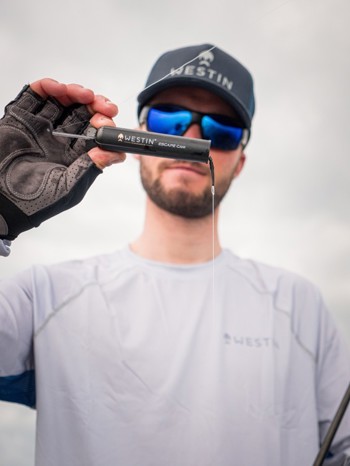
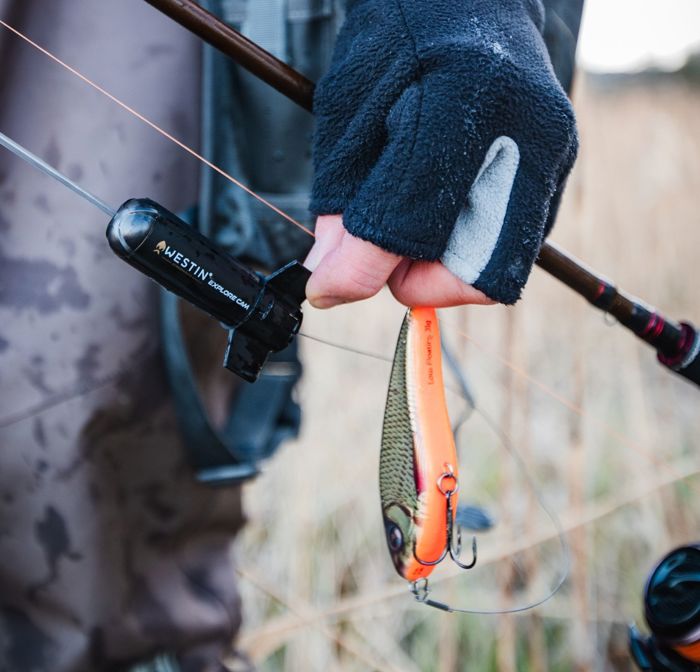
The lighter the camera, the more flexible your rigging options. If it’s the size of a tennis ball, forget casting it. That’s where something like the Westin Explore Cam, about the size of a single AA battery, really shines. The smaller and lighter the camera, the more it actually becomes part of your fishing setup - not a weird attachment you’re awkwardly working around constantly. That low profile isn’t just good for casting - it makes your footage better too. A lighter cam is less likely to "spook" or scare fish away, more stable on retrieve, and easier to control when current or lure motion starts tugging at it. And bonus: you’re not fighting your own camera every time you try to work your bait the way it’s meant to be fished.
Depth rating
Fishing in ponds or shallow streams is one thing. Dropping into deeper lakes or saltwater structure? You want something tested to 500+ feet. Now of course, if you’re fishing shallow water or clear ponds, you might never push past 10 or 15 feet. But once you start targeting offshore structure, deeper ledges, or even just steep drop-offs in your local lake, you need a camera that can hang. That means pressure-tested, fully sealed, and rated for way deeper than you think you’ll ever go. Water pressure gets real, real fast. A camera rated for 30 ft might work fine - until the one time you let it drop too deep and it starts leaking like a cheap cooler. You don’t want to be that guy trying to dry out your SD card with a hair dryer because a cheap "waterproof" camera case gave up at 40 feet. Both the Explore and Escape Cam from Westin Cam are waterproof to 650ft - plenty of margin. It gives you room to explore, room to experiment, and room to trust that if you want to drop it into a reef system, a brush pile in 80 feet, or even just get footage from beneath the thermocline in a deep reservoir, your camera’s not going to tap out before the fish show up.
Battery runtime
When picking a wireless underwater camera, runtime is a key spec. You want at least an hour of usable recording per charge, with extra as a comfortable benchmark. The Westin Explore Cam has a battery life of 1 hour and 25 minutes, and the Westin Escape Cam can reach 2.5 hours, giving room for multiple casts, spot checks, and lure tests before recharging. Either can cover an entire trip’s worth of clips. The key is pacing - using the camera to check structure, watch retrieves, or log fish behaviour, not as a constant underwater feed.
Recording underwater draws steady power, and battery performance drops in cold weather. A unit that records several hours in warm water won’t last as long under ice, but in practice, battery life usually drops by 20–30% in sub-freezing conditions, and up to 40% in extreme cold and wind chill. That means a 90-minute summer runtime may become 60–70 minutes on the ice, or less when moving hole to hole in low temps. Battery life can make or break underwater filming - but newer cameras handle it well. The Westin Explore Cam runs about 85 minutes per charge, while the Escape Cam exceeds 2.5 hours. That’s enough for multiple spots, lure presentations, and checks without recharging or relying on power banks.
Pro Tip: Runtime often feels longer than it sounds, because you’re not recording constantly. A lure cam records short sequences during casts and retrieves, then is stowed between uses. This pattern extends battery life beyond continuous-use expectations.
Housing durability
Hard impacts against rock bottoms or repeated use in sub-freezing temperatures test any equipment. Durable casings can protect lenses from scratches, and compact shapes keep the camera from drifting too much in current. Large camera housings may seem to promise greater durability, but this isn't always the case. They can also add drag under the surface and make the camera wander. A tight, compact build gives you cleaner clips, truer lure action, and a camera that feels like part of the tackle instead of a bulky attachment that is more likely to scare fish.
Tip: For ice fishing, a smaller profile means easier retrieval through narrow holes.
A more compact, streamlined camera tracks more naturally with the lure when you’re casting inline, and if it has stabilisation features, it’s much less likely to roll or spin in current. It also slips through grass or brush with less hang-up, so the footage shows the strike zone instead of a lens full of weeds.
Storage
Since wireless underwater cameras don’t transmit live, everything depends on storage. The best setups make file transfer seamless once the unit is retrieved, so you can quickly move clips to your phone or a laptop. Reviewing footage at the end of the day for small details - a tail slap, a lure ignored after a pause - add up to sharper instincts next time.
Stabilisation
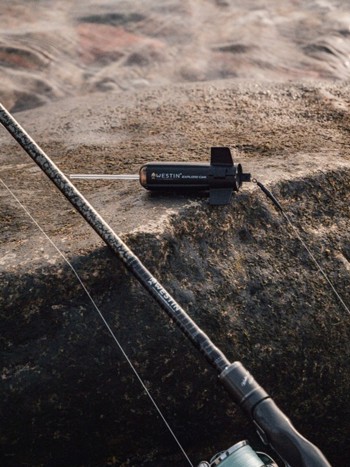
Ever try to watch shaky underwater footage? Nausea city. Stabilisation makes a huge difference. Even light current, line tension, or a sudden twitch from your rod can send a camera wobbling all over the place. And when that happens, good luck spotting anything useful in the footage - let alone enjoying the playback without feeling like you’re watching a found-footage horror film starring confused perch. Stabilisers like the Escape Cam’s Y-fin help keep everything level and smooth even during action-packed strikes: Instead of a chaotic swirl of bubbles, weeds, and whatever your line dragged past on the way down, you get clear, level shots where you can actually see and track fish movement, lure behaviour, and catch those key moments when everything comes together.
Key uses for a wireless underwater camera
Scouting structure
Casting near structure or dropping a camera beside submerged timber, grass lines, or rock piles confirms whether those spots actually hold fish. Sonar might tell you something’s down, but a recording shows whether it’s baitfish, gamefish, or just debris. Over time you start building a mental catalogue - how bass line up tight on stumps, how crappie hover just off brush, how pike hang on the edge of weedlines waiting to strike. Those are patterns you only really trust once you’ve seen them on video.
Studying behaviour
Every angler has had days where fish follow but won’t commit. Reviewing recorded footage shows details you never catch in the moment: angle of approach, pauses, or whether lure speed pushes them away.
Refining presentations
By watching playback, you can connect specific rod actions to what the lure truly does underwater. A jig hop may look sharp above the surface but drift lazily below. Recording retrieves shows how lures behave in real conditions - current, depth, clarity - so you can dial in the cadence. After a while you start connecting dots between small adjustments on the rod tip and big changes in how fish react, and over time, the connection between motion and response becomes second nature.
Seasonal insights
Footage collected across months becomes its own reference guide. Spring bass relating to shallow brush behave nothing like the same fish sliding to deeper ledges in summer. Perch crowding together under ice holes look different than the scattered schools of fall. By stacking clips from different times of year, you see transitions play out in your own waters instead of guessing based on someone else’s fishing report.
Ice fishing with wireless lure cams
Winter anglers have been early adopters of wireless underwater cameras because the conditions suit them so well. On the ice, you’re already stationary over a hole, and lowering a compact camera alongside your jig requires almost no extra effort. On frozen lakes, wireless fishing cameras are useful because they slip easily through drilled holes and record without a cord to freeze or tangle. Most anglers cast or lower the camera right next to their jig to capture how fish react in real time, then review the clips later. The footage often shows small details: perch nipping and turning away, walleye holding back before committing, or pike cruising in from the edge of the hole.
Once retrieved, that footage can be a revelation. Panfish often crowd the bottom but react differently to each presentation. Perch might school and scatter, while walleye tend to drift into view slowly, testing how long they can study a bait before striking. Watching these patterns on video after the fact gives context to every missed hookset. Battery life is the main challenge. Cold pulls power fast, so insulated storage become part of the kit. Some ice anglers will rotate cameras, fishing one hole while another unit records at a different depth or location. That gives you a set of clips that show how fish behaved across the ice field. Over a season, those perspectives show you their patterns of movement that are difficult to understand any other way.
For anyone who has wondered if fish were ignoring a lure or simply not there, a wireless lure cam provides the kind of confirmation that sonar alone can’t deliver. Over the course of a season, these recordings create a private archive of how fish respond to weather shifts, pressure changes, and bait choices - a study tool that keeps paying back long after the ice melts.
Beyond the Ice
Of course, many of these same strengths apply to open water. In shallow rivers, dropping a fishing lure cam beside logjams shows whether smallmouth are stacked inside or if the marks on sonar were debris. On grass flats, the playback reveals how redfish or bass navigate channels and potholes. Offshore, clips of bait schools and curious gamefish turn into lessons about timing and lure placement.
Practical fishing scenarios
Inline rigging/casting beside the lure
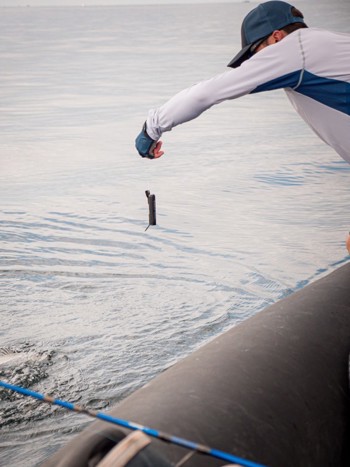
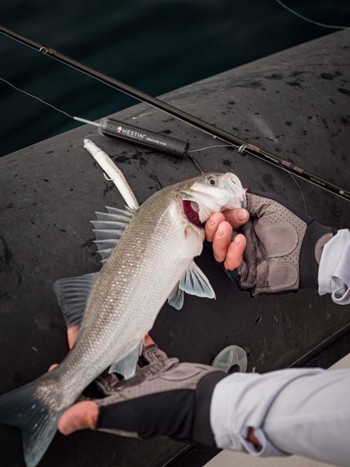
One of the best ways to use an underwater fishing camera is by rigging it inline or casting it close to the lure itself. This puts the camera in the same strike zone and shows the entire sequence - how fish notice the bait, how long they track it, and what makes them commit or drift off. Reviewing this footage teaches things that no sonar cone or surface observation can capture.
Fine-tuning jigging and retrieve styles
It’s common to think a jig hop looks sharp or that a crankbait is digging correctly, but underwater footage often reveals something different. Reviewing clips helps connect rod movement to lure action. That loop of testing, recording, and watching back gradually trains muscle memory. The next time you fish, you’re less likely to waste casts on motions that don’t trigger strikes.
Spotting what sonar misses
Sonar shows shapes and density, but it can’t reveal the subtlety of behaviour. A video of crappie shifting in and out of brush piles shows why one cast hits the sweet spot while others don’t. Seeing a pike lurking just outside the cone explains why sonar didn’t register what turned out to be the biggest fish of the day. Wireless underwater fishing cameras - whether you call them bait cams or fishing lure cameras - add a layer of evidence to the fishing process, sharpening your instincts over time. When you can see how fish act around structure, how they treat your lures, and how patterns shift with conditions, every trip becomes a little more informed than the last.
Checking structure
A lot of time gets wasted fishing “good looking” spots that are actually empty. Dropping a wireless fishing lure cam alongside a submerged tree or ledge can confirm in minutes whether there are fish holding there. Even when the water looks promising on sonar, seeing footage of baitfish or actual predators tight to the cover makes the choice clearer.
Understanding seasonal behaviour
Spring bass nosing along shallow stumps act nothing like the same fish buried deep in late summer. Fall walleye circling baits at dusk won’t look anything like their daytime patterns. Building a library of footage across seasons turns casual fishing into an ongoing study. Having that kind of record changes how you trust your decisions the following year.
Building a personal archive
Every session with a wireless underwater fishing camera adds to a growing bank of knowledge. Recorded clips show subtle differences in how fish react across weather shifts, water clarity changes, and seasonal transitions. Over time, that library becomes a private reference, answering questions that once felt like pure speculation. Anglers often talk about instinct - the sense that tells you when to slow down, when to move, or when to stick it out. A camera doesn’t replace that, but it sharpens it. The footage reinforces the hunches that prove true and challenges the ones that don’t. Reviewing your own data, captured on the exact waters you fish, is more valuable than any generic advice.
THINGS YOU CAN LEARN FISHING WITH WIRELESS UNDERWATER CAMERAS
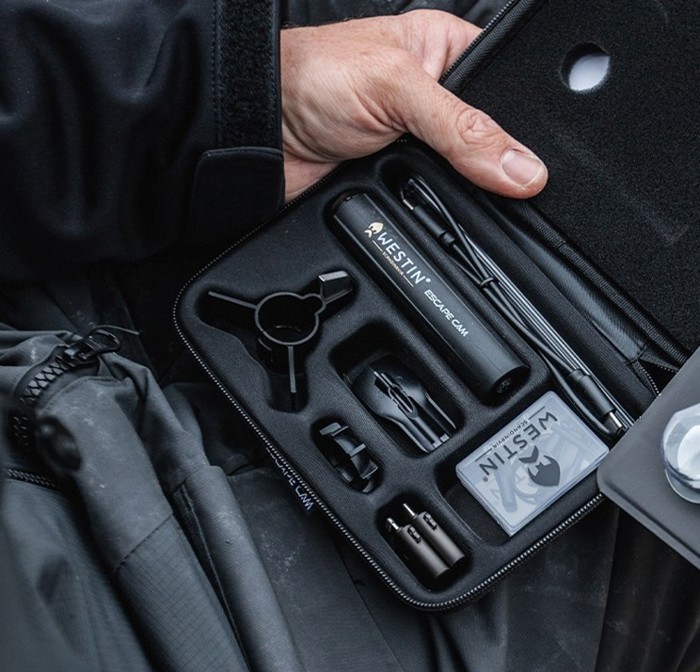
If you’re thinking about picking up a wireless underwater fishing camera for the first time - you’ve probably already seen how much intel these things can provide. They’re also just interesting to fish with. There’s something very satisfying about sending a camera down and seeing what that stretch of water actually looks like on a normal day - how the bottom lays out, how bait moves through, how fish slide in and out of view without ever tipping their hand on the surface. Sometimes nothing dramatic happens at all, and that’s still useful. Other times you catch a quick follow, a half turn, or a species drifting through the frame that you never would’ve known was there.
Wireless underwater fishing cameras let you record video of what’s happening under the surface. They can show how your targets approach, how they react to speed changes, how they track from behind, how they turn off at the last second, or when they hit without hesitation. And over time, that footage builds a picture you can work from. What you do with that information is where the difference comes in. When I used an underwater camera hands-on for the first time, I figured it would mostly confirm what I already knew. I thought I had a solid read on how fish were tracking my lures - turns out, I was off more often than I expected. Fish I assumed were flaring off early were actually following all the way in, sometimes multiple casts in a row without touching it. On the other hand, lures I thought were swimming right - like a paddle tail ticking over grass flats or a suspending twitchbait near a bridge shadow line - were sometimes drifting nose-up or rolling slightly on the pause. You’d never know it from the rod feel alone.
In some cases, snook or jacks were trailing from an angle I wasn’t expecting, peeling off at the last second without any visible surface cue. On the reef, small changes in retrieve speed could make the difference between getting a half-hearted look from a mangrove snapper, and triggering a full commit. Little things like that don’t show up on sonar - or even in "gut feeling." They only show up on video. Those early surprises were useful, but the real value of the camera only showed up once I started using it deliberately, with specific questions in mind.
Of course, there’s a learning curve. It’s natural when you first get an underwater camera to want to start casting it around, just hoping something bites on camera. If that’s all you’re doing, the camera will still be a lot of fun to use. But to get useful intel, you’ve got to fish it with some intent. Think of it less like filming and more like running a controlled test: you’re isolating variables, watching behaviour, and picking up details that would’ve gone unnoticed otherwise.
How does a "wireless" fishing camera work underwater?
Top underwater fishing cameras like Westin Explore Cam and the Westin Escape Cam don’t stream video through water. That wouldn’t work - water rapidly absorbs the radio frequencies used by Wi-Fi and Bluetooth. (Even deep sea/ocean-rated submersibles don’t try to beam video through water - they use hard lines for a reason. And that reason is that physics always wins underwater.) Instead, top-rated underwater fishing cameras record footage internally while submerged and transfer the video wirelessly only after they’re back above the surface.
During the cast, the camera operates as a self-contained recorder. There’s no signal being sent while it’s underwater, which avoids dropouts, lag, or range limitations entirely. Once retrieved, the footage syncs to a phone or tablet over Wi-Fi for immediate playback and review. This design changes how the camera is used. You’re capturing behaviour first, then reviewing it after the fact. That makes these cameras better suited for analysis, and it encourages slower, more deliberate test passes rather than constant adjustment mid-retrieve. The camera records the pass, then syncs wirelessly once it’s back above the surface, letting you review clips on your phone right there in the boat or on the bank. On the better systems, that playback is quick and smooth, which makes it easy to scroll through a few casts, note what stood out, and then make the next one with that in mind.
Ways to use a wireless underwater camera while fishing
You don’t need to be a "high-tech fishing gadgets" guy to get value out of one of these. Here’s how guys are actually using them on the water:
- Casting it out ahead of a jig to watch fish approach from a distance.
- Dropping it vertically in brush piles to scout what’s living down there.
- Running it inline with a swimbait to see how your retrieve really looks.
- Reviewing the footage back at the truck to make adjustments for tomorrow.
There’s something kind of satisfying about watching the moment a bass flares its gills and commits - or seeing what didn’t happen and learning from it.
Explore vs. Escape: Which Westin Cam fits your style?
Westin Cam keeps it simple with two models - each with its own strengths.
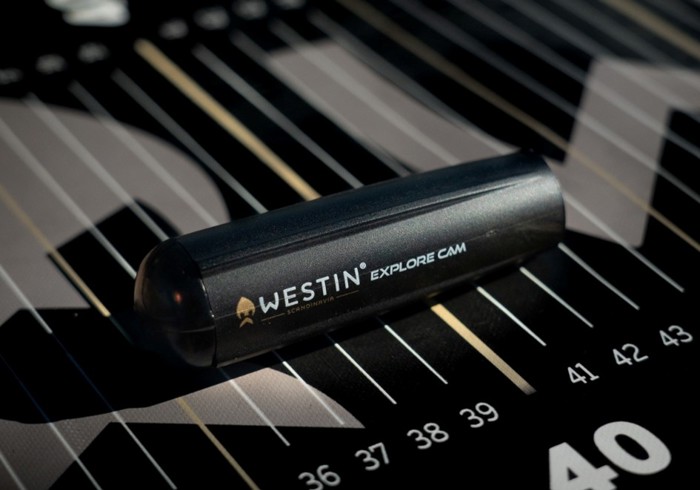
Explore Cam
- Just under 28 g / 1 oz
- Records 1080p at 30/60fps
- Waterproof to 200 m / 650 ft
- Battery lasts 1 hr 25 min
Perfect if you want to keep things as light and simple as possible. The Explore is great for finesse rigs or anglers who want minimal weight interference, high clarity environments, and focused recording sessions.
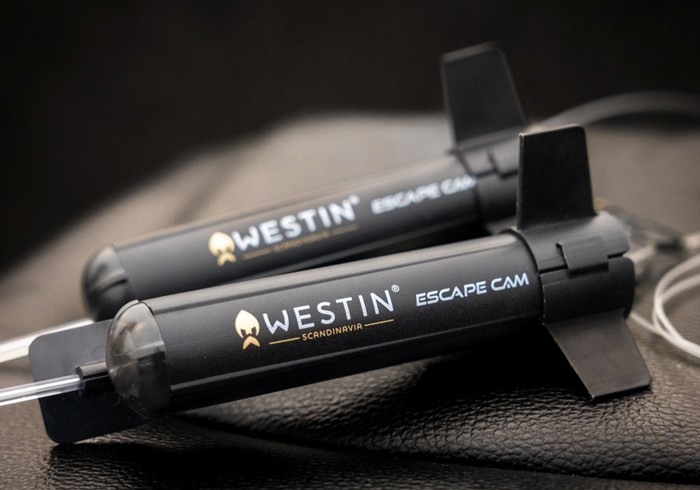
Escape Cam
- Slightly heavier at 40 g / 1.4 oz
- Same 1080p video quality
- Battery goes for 2.5 hours
- Has a Dive Lip + Stabiliser Y-Fin
A great choice if you fish longer sessions, broader coverage of underwater terrain or deal with currents and need a little extra control keeping the camera steady.
Both are easy to rig, quick to sync with your phone, and built to handle being dropped, cast, dunked, and reeled in a hundred times over.
Do I need any special setup?
Not really. That’s one of the biggest perks.
- No cables
- No external battery packs
- No downloading footage to a laptop just to see it
Just mount it, fish it, and review it when you’re done. If you’re running a Westin Cam, it’s all mobile-friendly - so you can see what happened while you’re still out there, not after you get home.
Tips for using wireless underwater fishing cameras
The best ways to fish with these wireless underwater cameras usually involve approaching them like a tool - and using it to answer specific questions about lure action, fish behaviour, or how structure looks at depth. So if you’ve got an underwater camera in your hands - or you're weighing whether it's worth adding to the kit - what follows are some tips for how to get footage that is useful. Not just good looking video, but footage you can review later and pull useful information from. The kind of info that helps you make better calls on lure choice, retrieve, positioning, or how fish are staging on a given piece of structure - in short, helps you become a better angler.
Start with familiar water
If you’re getting used to an underwater fishing camera, it helps to begin in spots you’ve already fished with some consistency. Whether that’s a ledge, a stretch of riprap, a dock row, or a break you’ve patterned before, familiar ground gives you reference points. You already have expectations based on past experience, now you can compare that to what the camera shows. This makes it easier to isolate variables. If fish are behaving differently than expected, or if the lure isn’t running how you thought, the footage gives you something concrete to adjust. It’s less about testing the spot and more about seeing how your gear and presentation are working in a controlled environment.
Dial in your camera-to-lure distance
Too close, and the lens picks up every twitch and wobble - but you lose sight of how fish are interacting with the lure. Too far, and the bait turns into a dot on the screen, with no real read on approach angle or strike behaviour. The sweet spot is somewhere that gives you enough room to see how the lure is working in the water column, while still capturing any fish that trail, study, or hit it. If you’re working a smaller bait - like a ned rig or soft jerkbait in clear water - tighten that gap so the details stay visible. For bigger baits or low-visibility situations, stretch it out to keep everything in frame without crowding. Think of it like setting a trail camera: you're not just trying to film the lure - you’re trying to capture the behaviour around it. The right distance gives you context, not just action
Match your retrieve to the camera’s stability
Underwater cameras don’t have built-in gimbals. If your retrieve is too aggressive, the footage turns into a blur of bubbles and motion with nothing usable in it. Every sharp twitch or sudden sweep moves the whole rig, not just the lure. To get better-quality video, treat the rod like you're filming. If your rod hand is doing twitch-dart-pop-jerk, some cameras will swing all over the place. Smooth, steady retrieves keep the camera stable and let you see how the lure moves through the water - and how fish follow, hesitate, or peel off. If you’re testing a bait that calls for more erratic movement, break it into short controlled segments. Let the rig settle between each burst so you can review how fish react to specific motions.
Anchor your test sessions to a goal
You don’t need to turn every outing into a science project - but if you’re going to run the camera, it helps to have something in mind you’re trying to observe. That might be as simple as checking whether your crankbait suspends on the pause, or seeing how a new trailer affects the fall rate of your jig. Maybe you're curious how fish approach a swimbait - do they come in from behind, flank it, or trail low and slow? Do they slide in from the side and hang parallel, waiting for it to stall? Are they tracking from underneath like they’re sizing it up before committing? Sometimes it’s the same water, same bait, different approach angle depending on the tide or the time of day. You’ll see fish tailing the lure, shadowing every move without striking. Other times they come in hard from 2 o’clock, almost like a cut-off move. Once you start spotting those patterns, you can start adjusting how you run the bait. Sometimes the goal’s even broader - like getting a feel for how a certain bottom type looks at depth, or seeing how water clarity changes over a grass flat once the wind picks up.
Use depth and water conditions to your advantage
Certain fishing environments and conditions will produce better underwater footage than others. If your goal is learning - not just filming for show - start with high-clarity water on low-wind days. Even tannic water can produce usable video if the sun angle is right and the bottom contrast helps highlight the bait.
Keep track of what you’re testing
If you’re testing three lures in one spot, don’t guess later which video shows which one. Make a quick voice note on your phone after each cast, or keep a dry-erase board in the boat if you’re batching tests. Better yet, break your test sessions into short, focused chunks. Five casts per lure, five minutes per spot. Keep it tight, and your review sessions become way more productive.
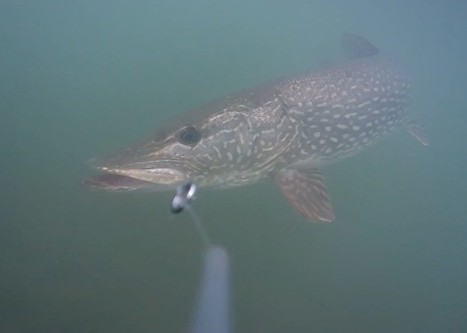
Review footage for patterns, not just strikes
- How fish stage in relation to structure (above, beside, below?).
- What direction they approach from.
- How long they track before turning off.
- Whether they spook from the lure, the camera, or the line angle.
- How fast they move in warmer vs. cooler water.
- Those observations start to tell you why things worked - not just that they worked.
Avoid these common mistakes
- Using wire leaders that interfere with the camera angle: switch to a clear fluorocarbon leader long enough to keep metal hardware out of frame.
- Tying on flashy snaps or swivels: Keep hardware minimal. Some fish will trail the snap instead of the lure.
- Fishing too fast: The camera needs time to record usable footage. Slow it down.
- Only watching the highlights means you’ll miss subtle behaviour shifts leading up to the bite.
Pro tip: record during transition periods
The best footage often happens during the first and last 30 minutes of a session - when light changes and fish behaviour shifts. This is when baitfish movement, colour contrasts, and feeding windows all change slightly. If you can pair footage with sonar snapshots, even better.