

ANALYSING FISH BEHAVIOUR FROM YOUR TROLLING FOOTAGE
Trolling has long been a go-to method for anglers targeting everything from offshore pelagics to inshore predators. But with the rise of compact underwater camera technology, you no longer have to guess what’s happening below the surface - you can see it in stunning detail. Westin Cam makes it possible to capture underwater trolling footage with ease, helping you refine your presentation, analyse fish behaviour, and relive those adrenaline-pumping strikes in HD clarity. Filming your trolling runs with a Westin underwater camera opens a new frontier in understanding fish behaviour, but capturing great footage is only half the equation. The real value comes from knowing what you’re actually looking at. Once you start reviewing your clips with intention, every moment - from subtle tailers to full-blown ambush strikes - becomes a clue about what’s working, what isn’t, and what needs to change in your approach.
Meet the camera built for trolling
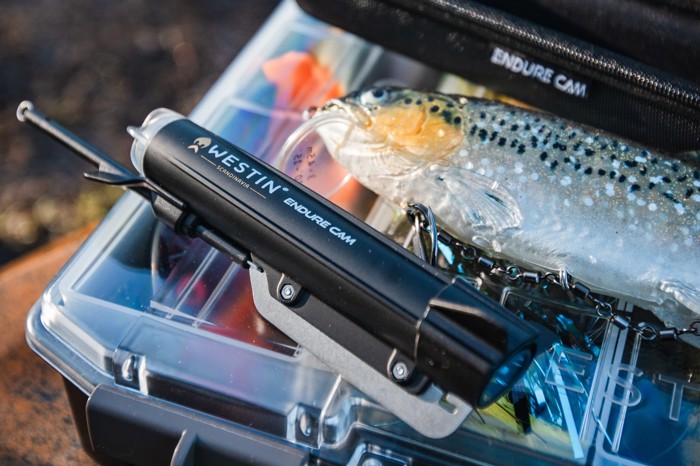
Endure Cam - The ultimate trolling companion
Westin introduces the new Endure Cam – built for trolling, ready to fish! The ultimate trolling companion: Designed for reliability and simplicity, this camera is ready to fish straight out of the box – no assembly required. With a robust build and extended battery life, it captures every moment of your underwater adventure. Constructed from impact-resistant Polycarbonate and marine-grade stainless steel, the Endure Cam is rated at 165 lb / 75 kg and delivers uncompromising strength and durability for serious anglers. The Endure Cam is perfectly balanced for trolling setups, delivering up to 3 hours and 40 minutes of continuous recording. It is filming in a 10° downward angle that locks your lure in the sweet spot and catches every predator charging from below. Its streamlined design ensures stability even at varying speeds, while the intuitive operation makes it effortless to start filming. Built tough, easy to use, and engineered for endurance – the Endure Cam is your window to the underwater world.
- Battery life: 3 h 40 min of continuous recording
- Strength (lb/kg): 165/75
- Downview - perfect lure framing
- Weight: 72 g – optimised for trolling
- Ready to fish: no assembly required
- Full HD 1080p at 30/60 fps
- Waterproof down to 200 m / 650 ft.
- View and share videos directly from your phone
Dialing in your setup
Capturing clear, compelling underwater footage while trolling requires more than just attaching a camera to your line and hoping for the best. Small adjustments to placement, lighting, and trolling speed can make a massive difference in what you capture - and how usable that footage is for analysis or content creation.
Camera placement
For ideal framing, mount the Westin Cam approximately 2 to 4 feet ahead of your lure. This distance gives the camera enough room to capture the full motion of the bait while keeping any approaching fish fully in frame. Positioning it too close might obscure the action or cause turbulence that affects video clarity, while placing it too far may reduce detail and make strikes harder to see. The sweet spot ensures you’ll catch the full scope of interaction - from subtle followers to all-out strikes.
- Full lure action in frame
- Clear view of approaching fish
- Enough separation to avoid turbulence distortion
Lighting conditions
Lighting should also be part of your planning. Natural sunlight diminishes rapidly with depth, and even a slightly overcast sky can reduce visibility underwater. For the clearest footage, plan your trolling sessions around midday when the sun is at its peak. Fishing in clear water? That’s even better, but it still pays to troll during times of strong sunlight. Shallower runs will naturally capture more light, but even deep water footage benefits from those optimal windows of brightness.
- Troll during midday sun for maximum penetration
- Prefer clear water when possible
- Keep runs shallower if light is limited
Trolling speed
Most trolling setups run somewhere between 2 and 6 knots, depending on the species you’re targeting. Westin cameras are engineered to perform within this range, but for those looking to capture the most stable, detailed footage, staying toward the lower end - closer to 2 or 3 knots - yields the best visual results. Higher speeds are still effective for recording strikes, but can introduce some motion blur or camera vibration that may obscure fine detail. Slower speeds not only stabilise the frame but also allow fish more time to engage with your presentation, giving you even better footage of the full encounter.
- 2–3 knots = best clarity and stability
- Higher speeds = more motion blur, but still usable for strike moments
Real-time lessons from real fish
The real value of underwater trolling footage isn’t just the visuals - it’s what it reveals. You can see:
- Fish following but not committing
- Lures spinning or behaving incorrectly
- Multiple fish interacting with your spread
- Strikes you never felt on the rod
This turns guesswork into feedback you can actually act on.
Reading fish behaviour from your footage
Filming your trolling runs with a Westin underwater camera opens a new frontier in how anglers understand fish behaviour. But capturing incredible underwater footage is only half the battle - knowing what you’re looking at is where things really start to pay off. Once you start reviewing your clips intentionally, patterns emerge fast. This is where your trolling setup turns into a learning system. Let’s walk through how to review your trolling videos with intention. From subtle tailers to full-blown ambush strikes, every clip offers clues about what’s working and what needs adjustment.
Curiosity vs. commitment
- Follow directly behind or alongside your lure
- Dart in and out without striking
- Track the bait for 10+ seconds
Reading strike style
Not all hits are created equal. Some fish blast a lure with full force from below, while others nip at the tail once or twice before committing. Watching your footage frame-by-frame can help you identify:
- Species-specific tendencies (e.g., king mackerel slashing vs. grouper engulfing)
- Reactionary strikes triggered by lure motion or directional change
- Near-misses that suggest spacing or camera rigging may be interfering
This insight gives you more than bragging rights - it’s the key to understanding what specific cues triggered the bite, allowing you to replicate them more often.
Identifying gear interference
In some clips, you may notice fish show interest but veer off once they reach the camera itself. Sometimes the camera itself affects behaviour:
- Fish reacting negatively to flashes, glints, or wobble from your camera
- Lures that swim erratically due to placement too close to the camera
- Sediment or bubble trails kicked up by your rig’s motion
Consider adjusting the camera’s distance from the lure or changing lighting conditions (time of day, water clarity) to reduce distraction.
When the lure doesn’t look right
You might be surprised how often trolling footage reveals that your lure isn’t swimming the way you thought it was. Common issues include:
- Lures spinning or tracking off-angle
- Swimming action that’s too subtle or overly aggressive
- Dragging at an unnatural angle when trolled too fast or improperly rigged
Seeing this on camera allows you to correct problems immediately - something you’d never detect from the boat.
Using footage to create a trolling game plan
Over time, your camera footage becomes more than just a highlight reel - it’s a research archive. The more you film and analyse, the clearer your patterns become:
- What lure types get the most committed bites
- What trolling speeds result in higher strike rates
- What species respond best to certain colours, depths, or actions
This transforms guesswork into strategy, giving you a tactical advantage every time you drop a line.
Turn every trolling run into a masterclass
Adding a Westin Cam to your setup turns your boat into a floating research platform. It gives you insights sonar and surface observation simply can’t provide. When you finally connect:
- Lure action
- Fish behaviour
- Strike timing
You’ll understand trolling on a completely different level.
Let the fish teach you
There’s no sonar or instinct that matches what underwater footage reveals. These videos aren’t just highlights - they’re direct feedback from the fish themselves. So when you review your footage, don’t just look for the strike. Watch the approach, study the hesitation, and pay attention to what the fish are telling you.